“Ceramics has long been the quintessence of luxury,” asserts Florian Daguet-Bresson in an article published by Le Monde. A statement that today resonates as self-evident, given the spectacular comeback this medium is experiencing on the contemporary scene. For although ceramics has always run through the history of civilizations, it was long relegated to the background in the West, confined to the realms of the decorative, the functional, or even the folkloric. Often neglected by art history, absent from major exhibitions, or sometimes mocked for its supposedly kitsch, crude, or even “unsophisticated” appearance, it seemed condemned to a form of artistic marginality.
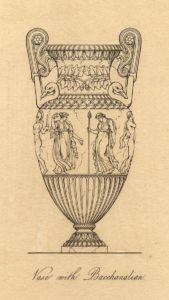
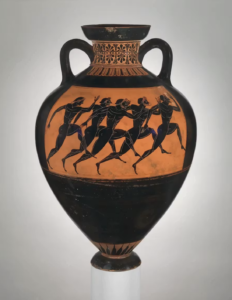
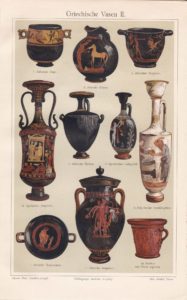
Yet in recent years, a genuine revival has taken place. Ceramics has once again established itself as a major medium, capable of expressing both contemporary radicalism and the poetry of the artisanal gesture. Exhibitions and fairs devoted to this field have multiplied, confirming its growing institutional recognition.
Among the landmark events, the exhibition Les Flammes, l’âge de la céramique, presented at the Musée des Arts Décoratifs in 2021, marked a revealing turning point: that of a perspective finally freed from the traditional hierarchies between so-called major and “minor” arts.
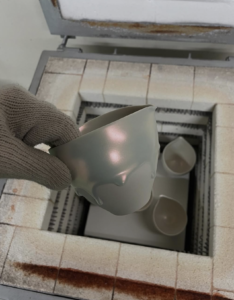
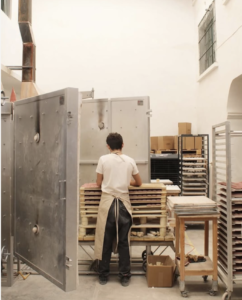
Ceramics is far more than a decorative discipline. It is one of the oldest mediums in human history, the first “art of fire” to emerge, even before glass or metal. What makes this medium particularly fascinating lies in its direct relationship to transformation: through fire, matter becomes durable. Firing is a decisive, sometimes unpredictable stage, during which the artist accepts that part of the work escapes their control. Today, artists use a wide range of kilns (wood-fired, gas, coal, electric, or raku) and develop an infinite variety of techniques, including glazing, smoking, reserve decoration, and luster. Thus, ceramics stands at a rare crossroads where technical mastery meets chance.
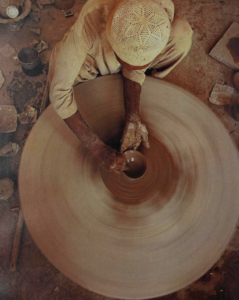
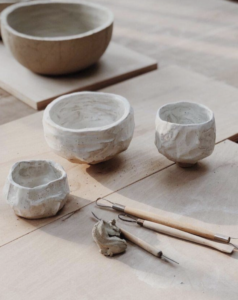
This discipline also raises a persistent question in the West: does it belong to the realm of the utilitarian object or that of the work of art? Ceramic objects can be functional, artistic, ritual, and sometimes all at once. In Japan, a simple bowl may be regarded as an absolute masterpiece, imbued with a sacred dimension. Historically associated with the grand art of statuary, ceramics was gradually relegated to the category of craft. It has suffered from enduring clichés: too decorative, too fragile, too feminine, or too domestic. In an art world long fascinated by conceptualism, minimalism, or performance, it was often perceived as a secondary medium, linked to tradition and craftsmanship rather than to the avant-garde.
Yet it has never ceased to evolve. It experienced a revival in the hands of the Modernists, such as Pablo Picasso and Fernand Léger, who helped restore this medium to the heart of artistic creation. Soon, other major figures embraced it, including Paul Gauguin, Salvador Dalí, and Marcel Duchamp. Ceramics then became a true field of formal experimentation, where form could be functional or deliberately dysfunctional. Some objects acquired a sculptural dimension, their function hindered by their very shape—such as an architectural teapot by Ettore Sottsass. Contrary to the common notion of an apolitical or merely decorative art, ceramics can also convey a powerful contemporary message. In 1987, David Gilhooly created Dagwood, a gigantic sandwich in glazed white earthenware, a direct and ironic metaphor for consumer society. Ceramics thus became a critical tool, capable of expressing social, cultural, or political issues with unexpected force.
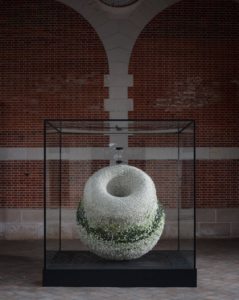
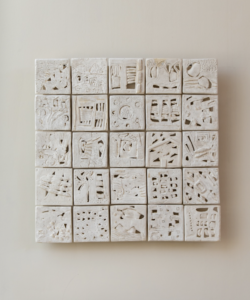
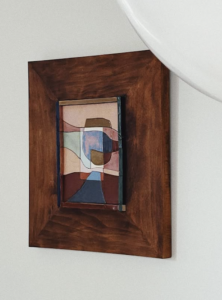
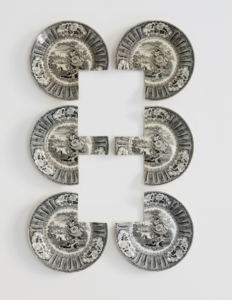
Today, ceramics takes on every possible form: monumental sculptures, immersive installations, minimalist pieces, narrative or figurative works, authorial design, and conceptual art. This diversity explains its growing presence in contemporary creation, as it allows boundaries to be blurred and gesture and thought to be reconciled. It is also appealing for its dual nature: it remains a relatively accessible medium, with many pieces priced between 150 and 250 euros, while at times reaching spectacular heights on the art market. Some works achieve striking records, such as the Lily Palace bowl, which sold for more than 35 million euros at Sotheby’s Hong Kong.
In an era marked by industrial production and dematerialization, ceramics also symbolizes a return to essentials: the importance of gesture, craftsmanship, and the handmade.
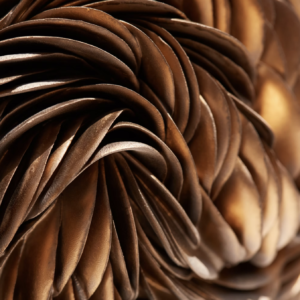
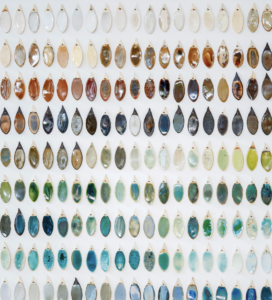
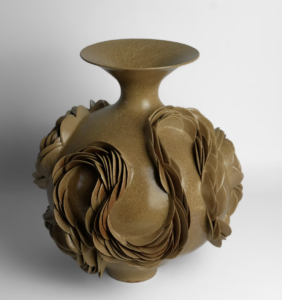
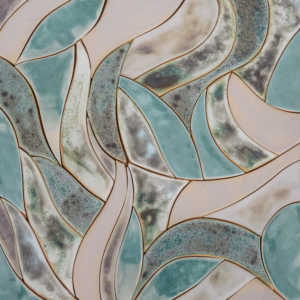
It is precisely within this dynamic that the work of Lorène Cavagna, a new ceramic artist at the Galerie Durst, takes shape. Fascinated by light, contrasts, and color, she focuses on the study of glazes, approaching them as both an artistic and scientific exploration. This investigation allows her to develop a remarkable palette of more than 250 glazes. Inspired by fashion, particularly the lightness of fabrics and the play of folds, her work occupies the space between volume and curvature, between tension and suppleness. She primarily works with stoneware, a material she values as much for its strength as for its unexpectedly delicate quality. Lorène Cavagna deliberately blurs the boundaries between fragility and resilience, structure and fluidity.
Discover her artworks : https://www.galeriedurst.com/artistes/lorene-cavagna/