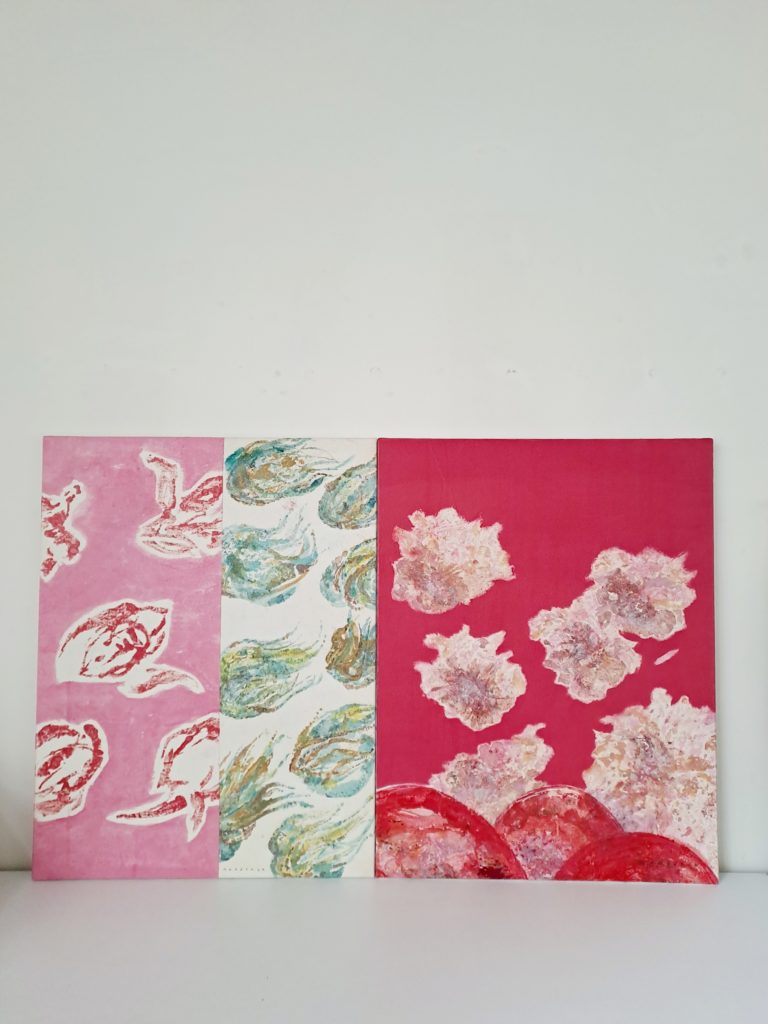
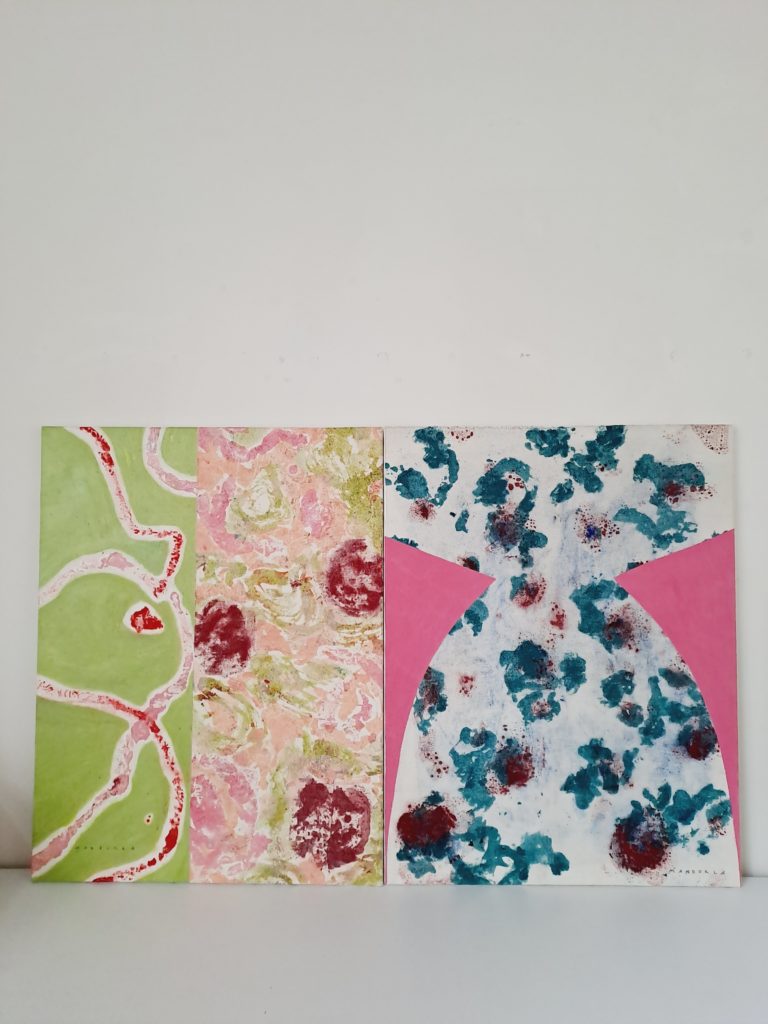
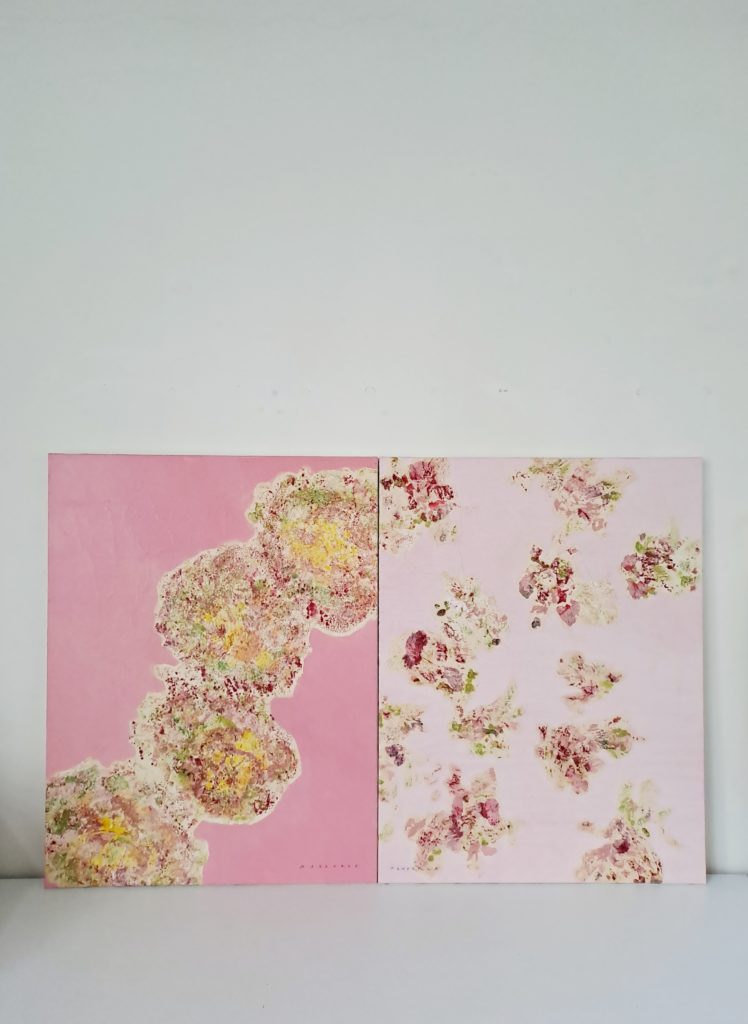
Exhibition from March 20 to April 12, 2025 at the Durst Gallery
Opening reception on Saturday, March 22, from 3 PM to 7 PM
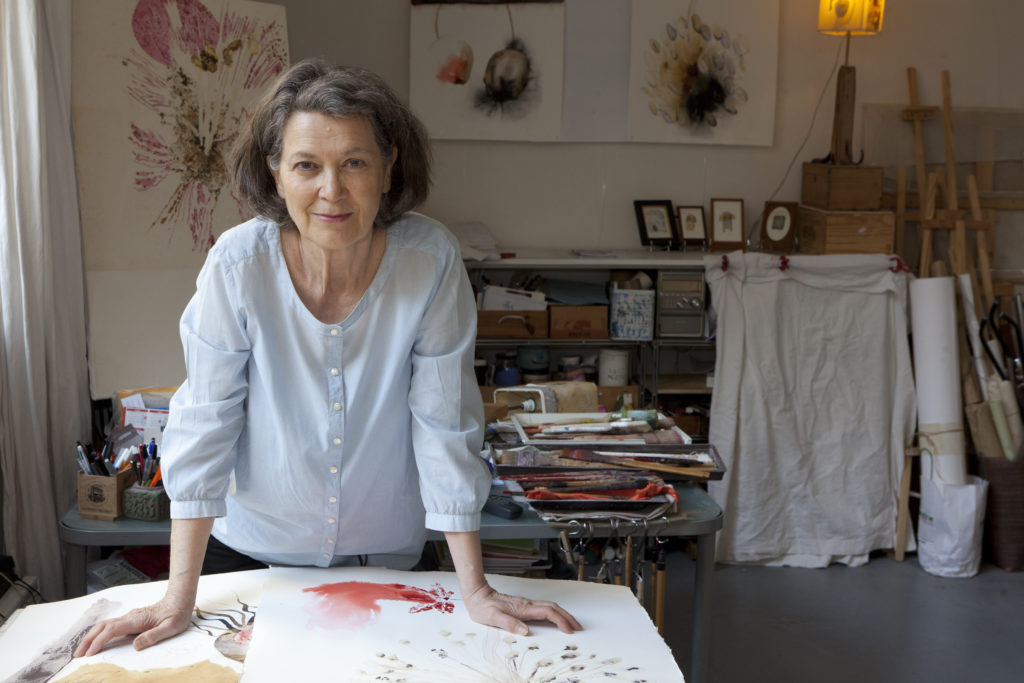
The Durst Gallery is pleased to present Caresser la couleur, a solo exhibition by Anne Mandorla that immerses us in a vibrant and sensory exploration of color. After a period marked by compositions in black, white, and ultramarine blue, the artist opens up her palette, playing with contrasts, textures, and gesture. We spoke with the artist, who reveals the behind-the-scenes of this new exhibition.
Anne Mandorla, how would you describe the spirit of this new exhibition?
Caresser la couleur tells a love story between an artist and color! I immerse my hands in this living material, just as my grandfather, a baker, kneaded his dough.
How did the idea for this exhibition come about, and what does its title mean?
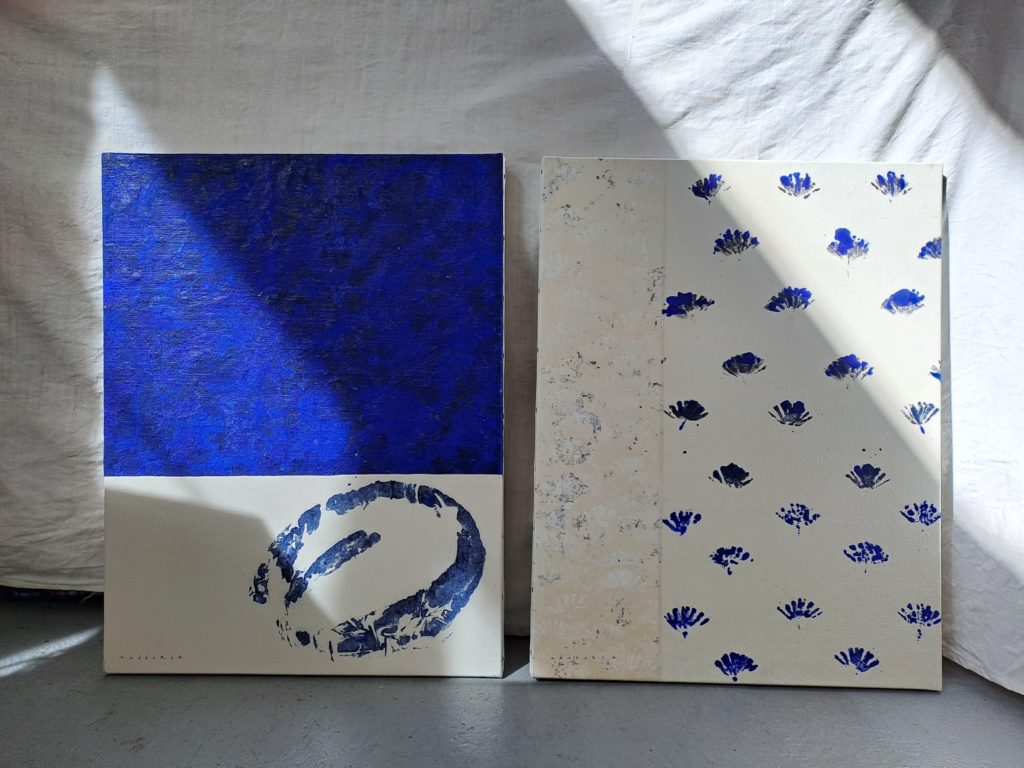
Peintures pour méditer precedes Caresser la couleur. This first series explores a meditative approach through abstract paintings, rigorously structured around white (emptiness, silence), black (form, movement), and ultramarine blue, an intense pigment equivalent to black in chromatic value. This limited palette, readable both in terms of value and color, gives the works great power, developed over several years.
During a discussion in the studio, Helena, the director of the Durst Gallery, expressed her curiosity about the introduction of color into my work. As a painter and printmaker, I have always loved and mastered color, thanks to my training at the ENSBA in Nancy and numerous exhibitions that refined my eye. I even gave a lecture on this subject. Taking on this challenge was great fun! A small diptych (No. 2343 and 2344) marked the transition to this new series.
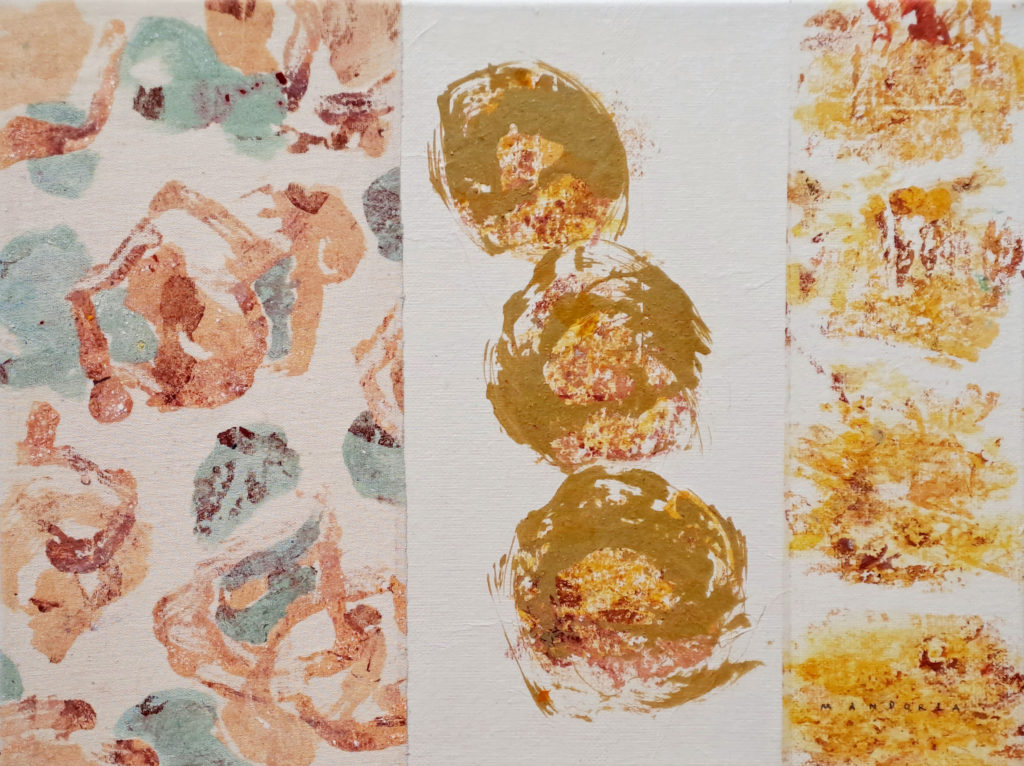
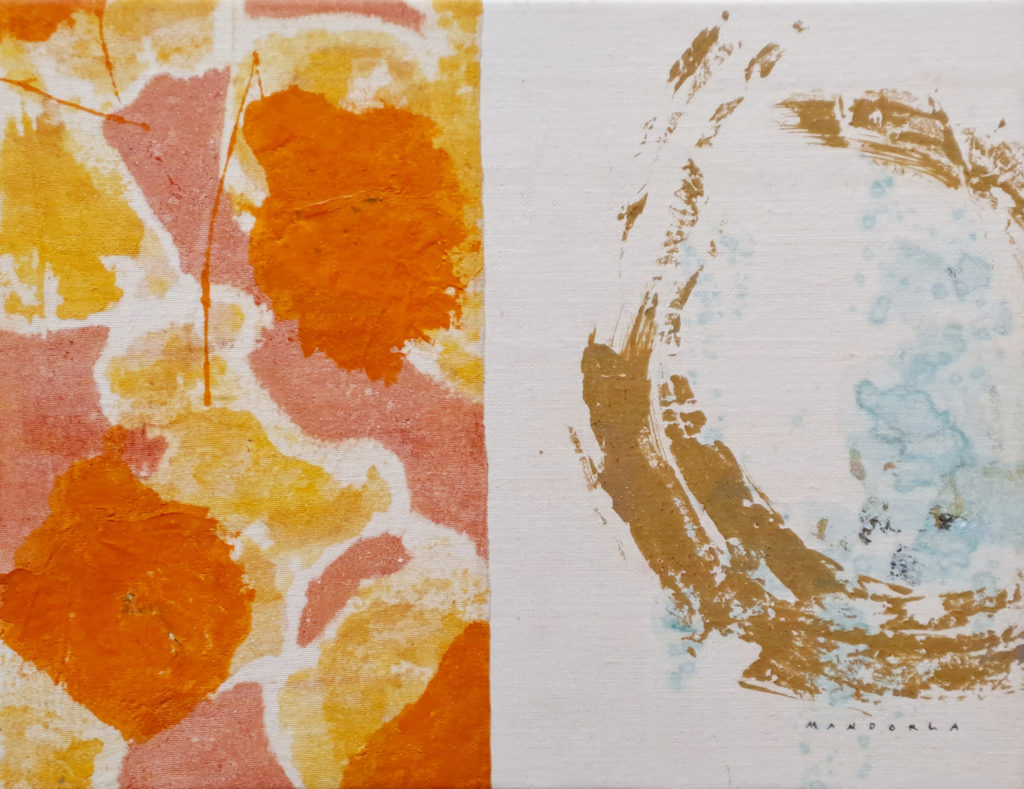
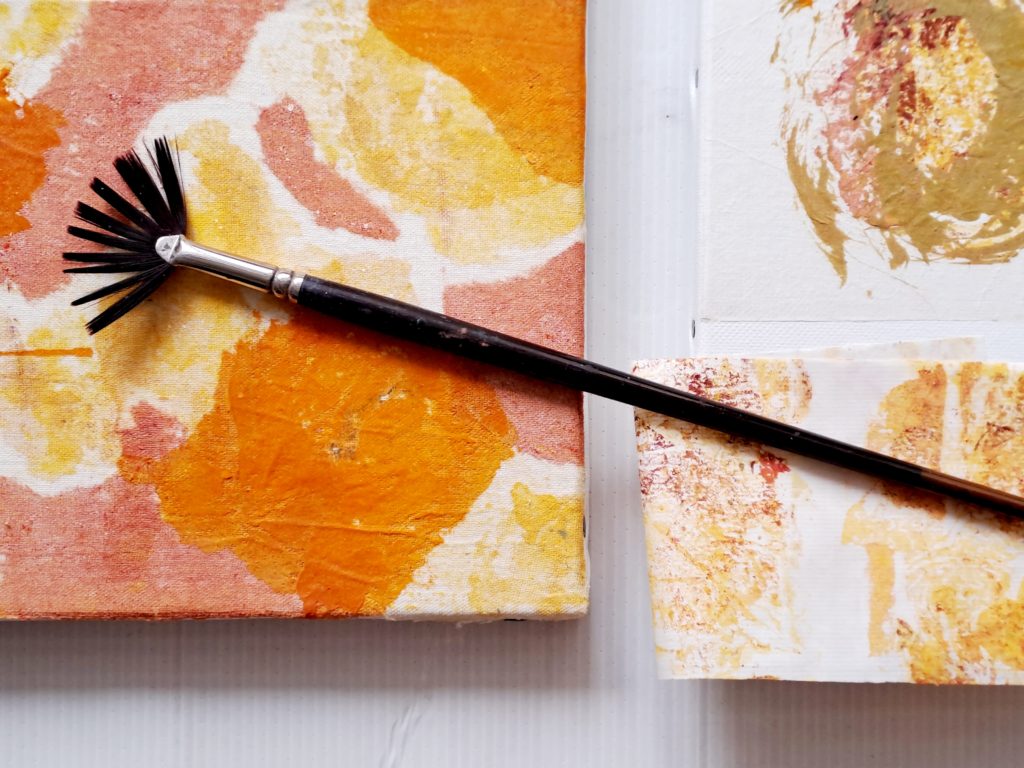
The idea for such a poetic title matured during a work session, when the mind wanders freely. Applying color to paper is like a caress: the brush must respect the fragility of the surface, or it risks tearing it. Paper and canvas yield to the colored material and to the artist’s gesture. Finally, I realized that, throughout my journey, I have learned to caress color, to tame it, to love it, and to be loved by it. It is a joy to know how to caress it: the painter’s gesture aligns with the physics of color. My painting is tactile and sensual, and color is its vector.
How did you approach color in this new series of paintings on canvas?
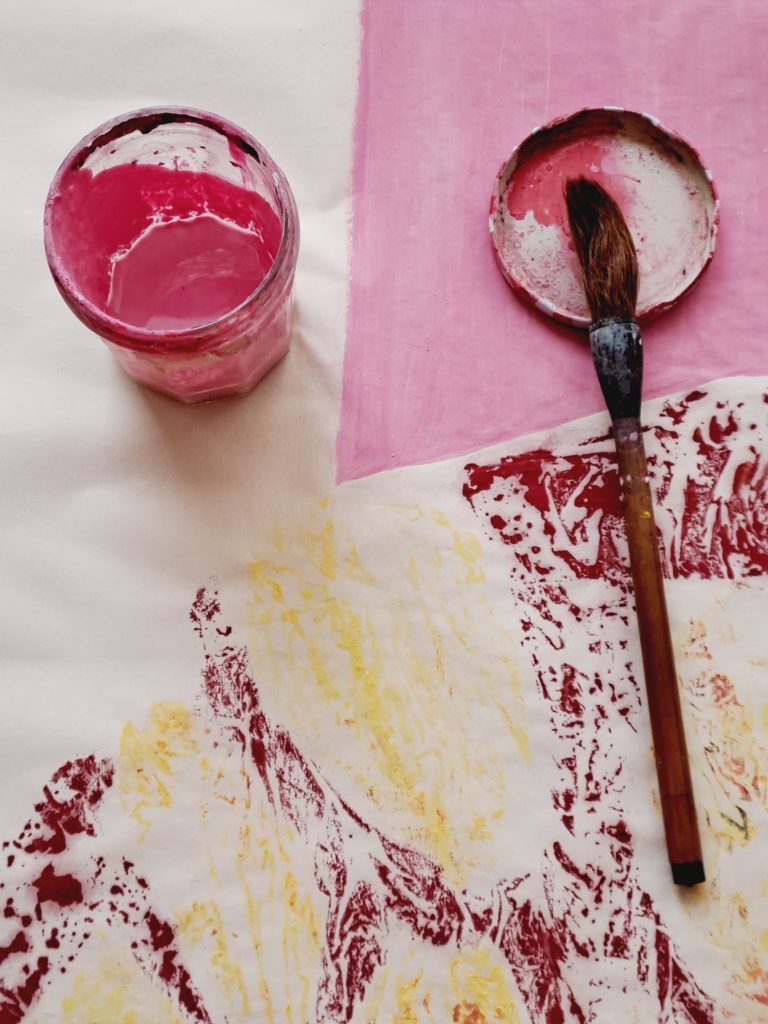
This series of new paintings on canvas explores a bold and vibrant palette, pushing contrasts at times to the point of stridency: greens sit alongside pinks, reds, and oranges, even to the point of provocation. A chrome yellow warms a violet oxide. It is the amount of colored surface that allows the contrast to be viewed without causing rejection. Or a white background provides breathing space. Or the composition itself provides structure. I fully play with the teachings of Johannes Itten, the painter and color theorist.
My palette evolves according to the themes I explore. Consentir au noir features upright compositions, using a range of blacks and dark values on an ivory background. My Nomades paintings, created in Africa, are colored with locally sourced pigments: ochres, soot blacks, and kaolin white.
It also evolves with my personal vision, what my eyes see. I don’t paint with emotions, but with my eyes, my hands, and my mind: it’s the alchemy between the three that creates the perfect harmony, or not! Then I destroy and start over, less and less thanks to experience.
Is there a guiding thread throughout this exhibition?
Yes, it is the transition from black and white to color, from rigor to freedom, to chromatic and gestural letting go. The composition is structured through color and movement, often ascending. The theme remains constant, centered on plant life. Each work stands on its own, yet some engage in a dialogue through their color palette or motifs.
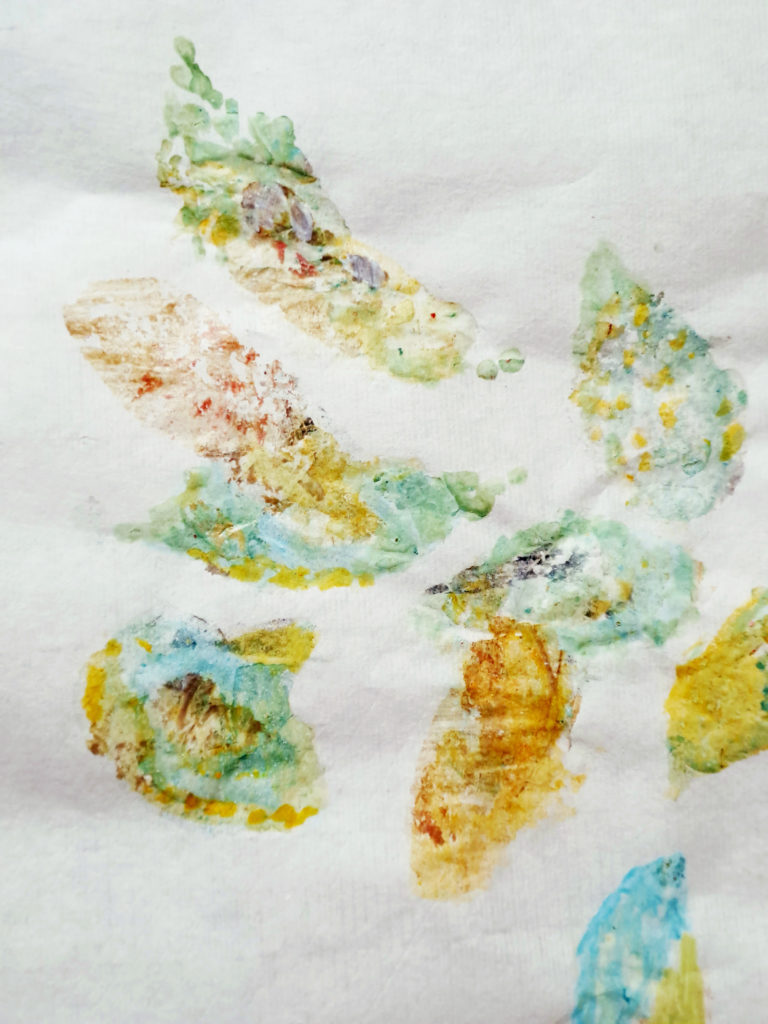
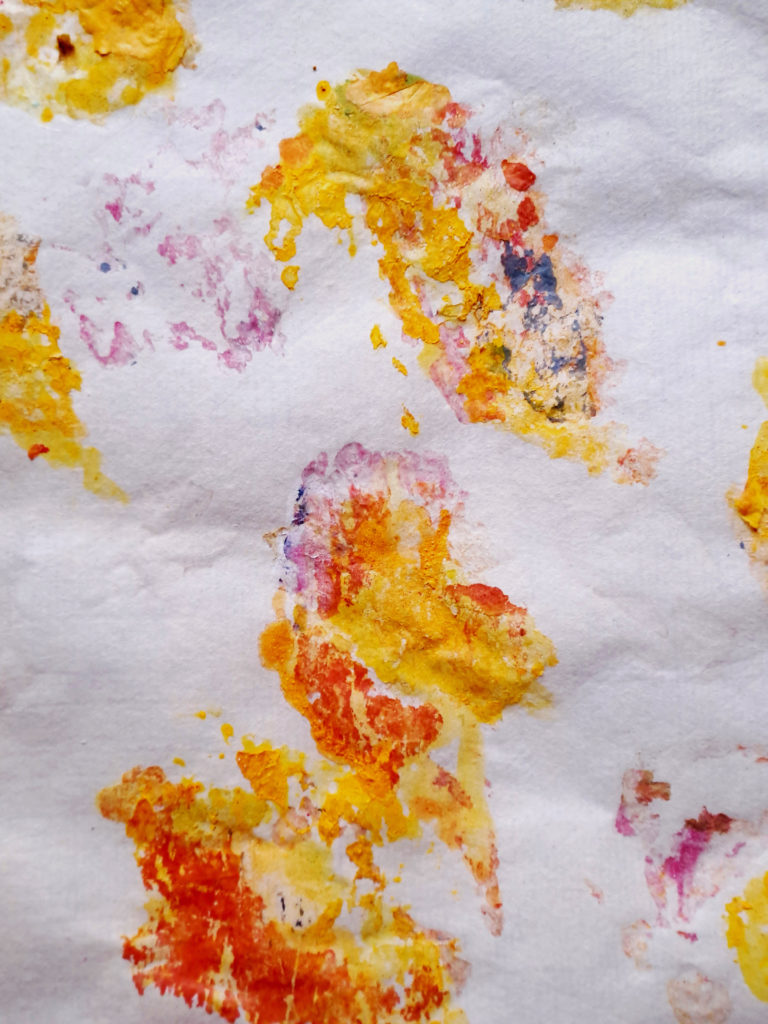
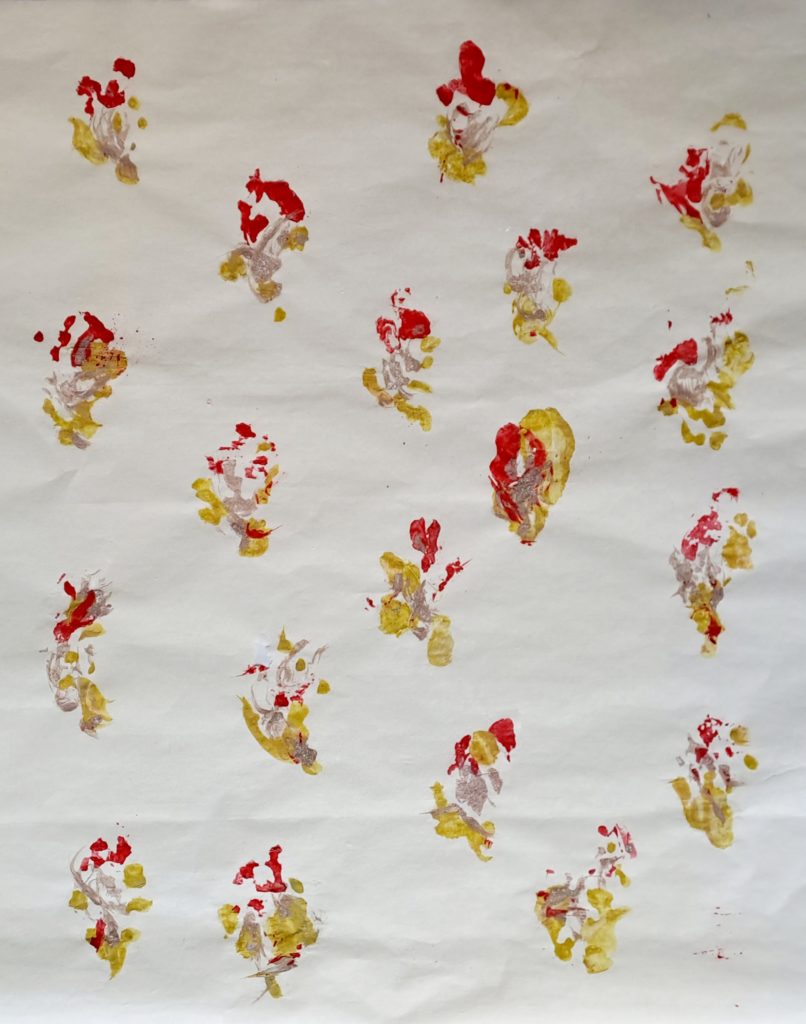
Have you explored a particular technique for this new series?
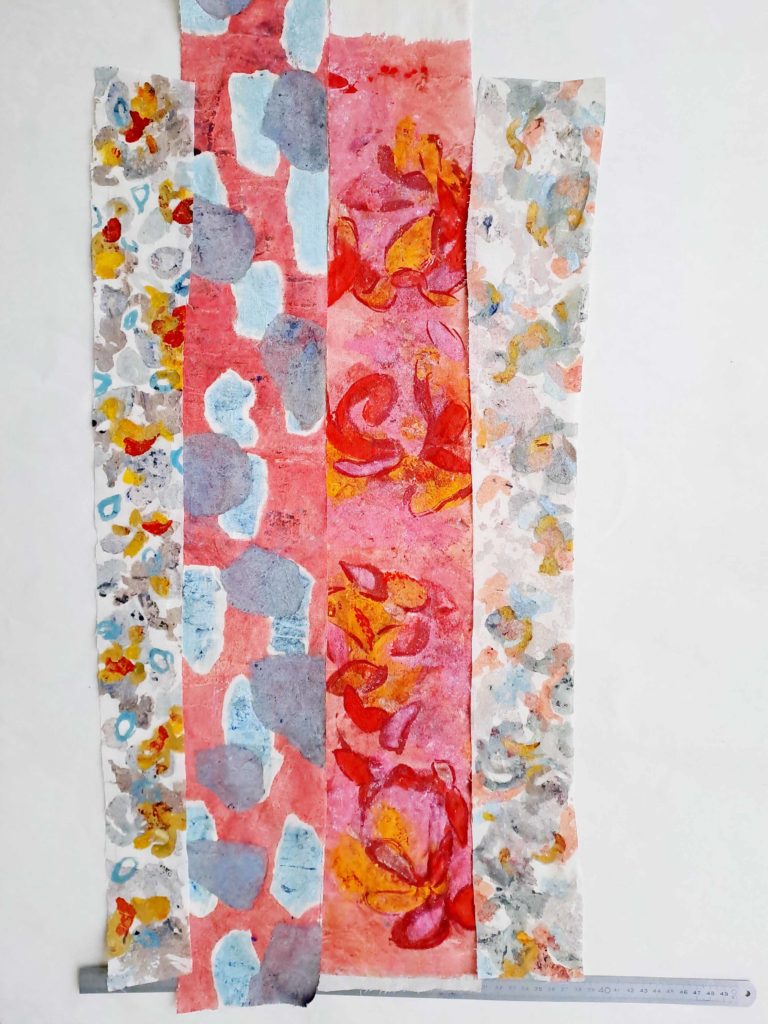
I have long developed my technique of painting with pigments and glues on thin paper, which is then marouflaged onto canvas. It is delicate to execute but provides a surface that is soft to the eye. Here, for some paintings composed of multiple panels, I have complexified this technique by painting on various fine supports, not only papers but also finely woven textures such as wild silk, linen, and cotton voile. Depending on the diversity of the weaves, each reacts differently to my pictorial preparations, and their juxtaposition requires patience and skill.


What influences have shaped your work for this exhibition?
My experience as a painting archivist at the Musée d’Orsay allowed me to observe Impressionism, Japonisme, and even Nabi art up close. The mind serves as an inexhaustible database for those who know how to look.
On the other hand, I have a particular sensitivity for embroidered fabrics, printed using carved wooden blocks or hand-dyed. Coming from a Vosges family of embroiderers specializing in white embroidery on linen-cotton mixed cloth, I observed these skills from childhood. My travels in Asia and Africa have fueled my quest for these specific techniques combining engraving, painting, dyeing and embroidery.
What emotion or sensation do you wish to convey through this exhibition?
When painting, I give a life impulse. Each viewer who looks at my paintings brings their own story, their own feelings, and it is in this encounter that the work takes on its full meaning.
Is there a flagship work or a piece that is close to your heart?
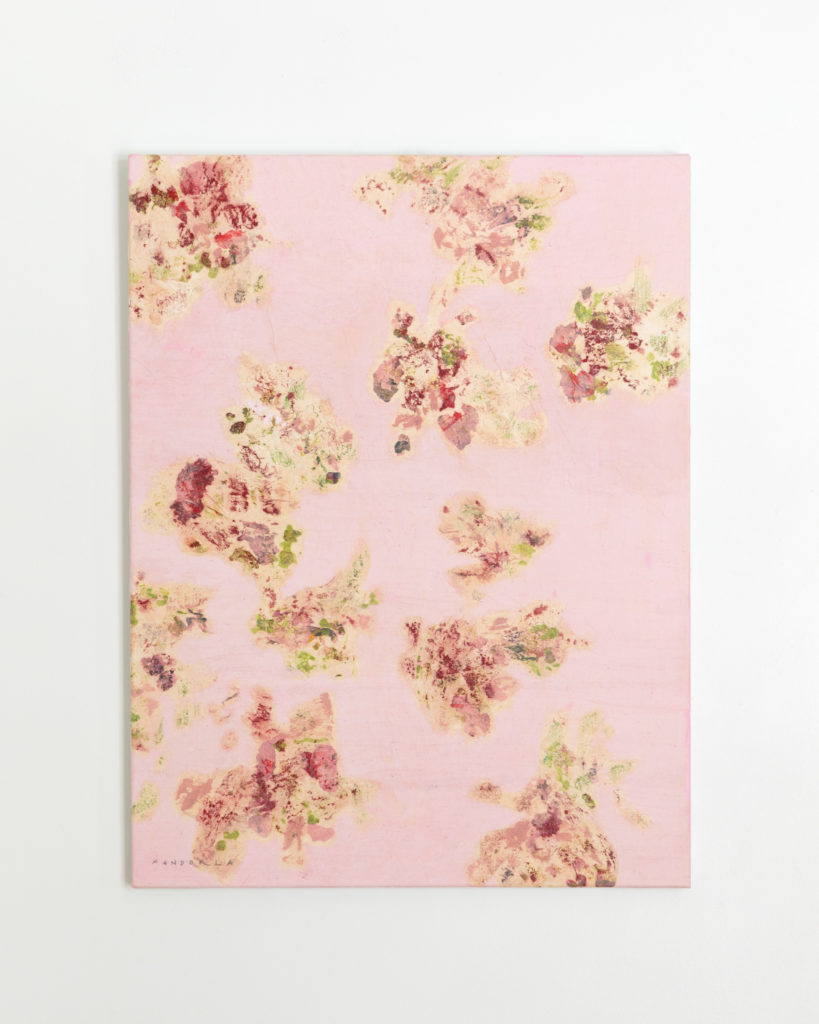
I have a fondness for N°2379, with its almost tone-on-tone all-over pattern, its soft and subtle color palette and its wildly uninhibited composition. It is airy and invites thoughts to take flight.
Are your works influenced by a specific place, light, or memory?
I walk in the forest every day, with many stops to observe plant elements up close or from a distance, or to frame virtual compositions within a landscape. When faced with a place that catches my attention through an interesting light or composition, I imagine how to approach it in painting. I create mental paintings, not real ones. Back in the studio, the brain freely recreates its perception, not necessarily on the same day. The long-term experience of practice allows this transformation of reality into creation.
What would you say to someone discovering your work for the first time?
Step into colour, let yourself be caressed by it and caress it in return! Painting these canvases brought me joy and energy. They journey among the previously created series. They are part of this whole, which I invite the viewer to discover.
What was the greatest challenge for this exhibition?
Getting the project validated by the gallery and fitting it into their calendar. From the first inspiring ideas, the refinement of the theme, the creation in the solitude of the studio through to the exhibition, this entire journey is fascinating. Leading a solo exhibition from start to finish in partnership with a motivated team and in a cordial atmosphere is very stimulating! I would like to thank Helena and her collaborators for their trust and professionalism.
Dive into Anne Mandorla’s world with an exclusive preview of her new series of paintings, to be discovered right now at Galerie Durst during the exhibition Caresser la couleur!