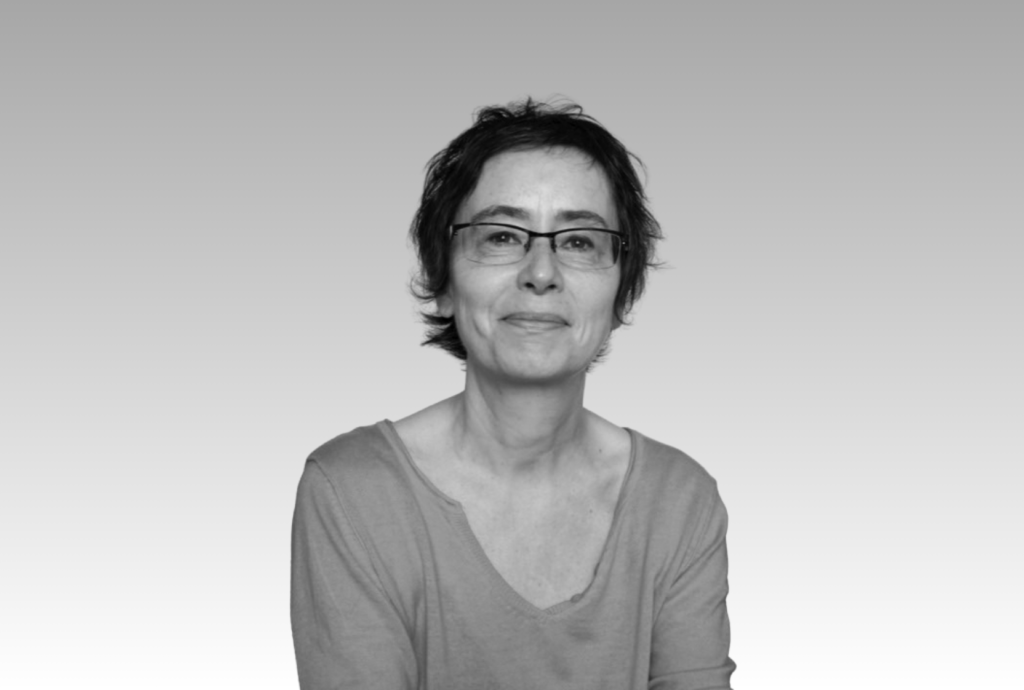
A new artist at the gallery, Christine Soyez opens the doors of her studio in the Paris region and invites us to discover her artistic world.
Hello Christine, can you introduce yourself in a few words ?
Born in Paris, I graduated from the École Nationale Supérieure des Arts Décoratifs, where I trained in drawing, graphic design, visual communication, and video animation. Alongside a career as a freelance creative graphic designer, I pursued a practice as a visual artist focused primarily on painting. For the past ten years or so, I have devoted myself to it entirely.
How did art come into your life?
From childhood, I experienced the intense pleasure of drawing and making objects. I loved the concentration it requires, the exploration. The encouraging gaze of those around you matters, but there is fundamentally a solitary and self-sufficient dimension to this activity, one you know you can return to at will.
I was therefore fortunate enough to never have had to ask myself what I was going to do with my life. The form this creative activity would take was the subject of a non-linear journey, but I knew it was my path.
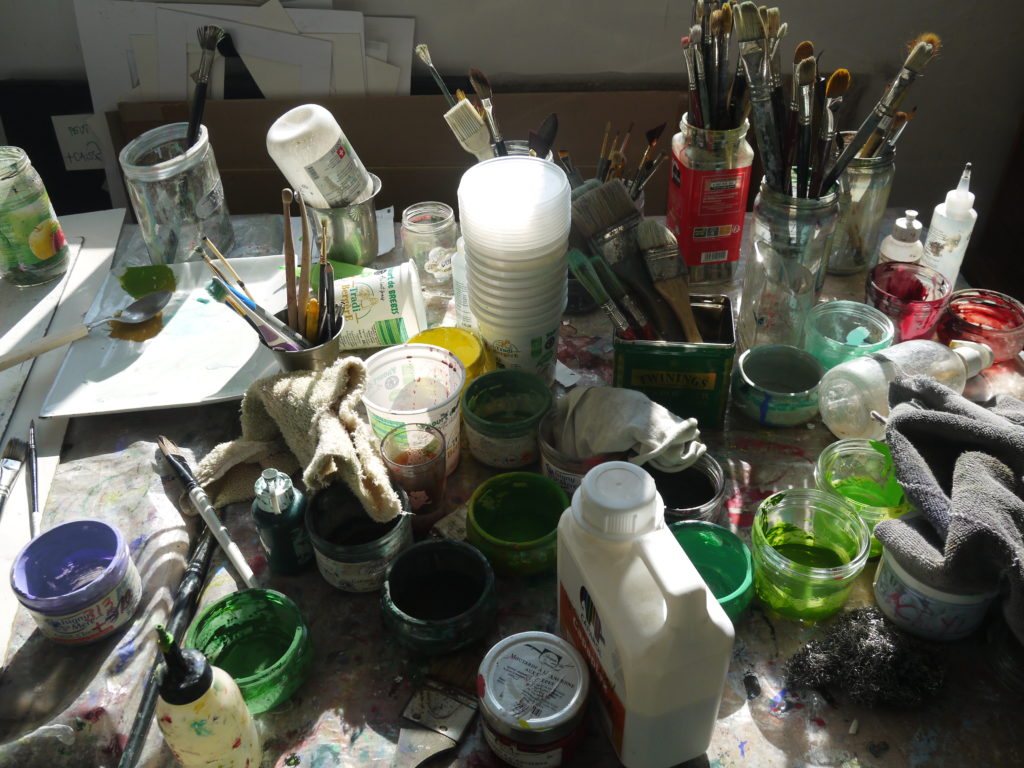
What kind of artist are you, and what is your relationship with creativity?
My connection to creativity is a vital one. Whatever doubts may mark the path of a painter, I hold the certainty that this need forms my very backbone.
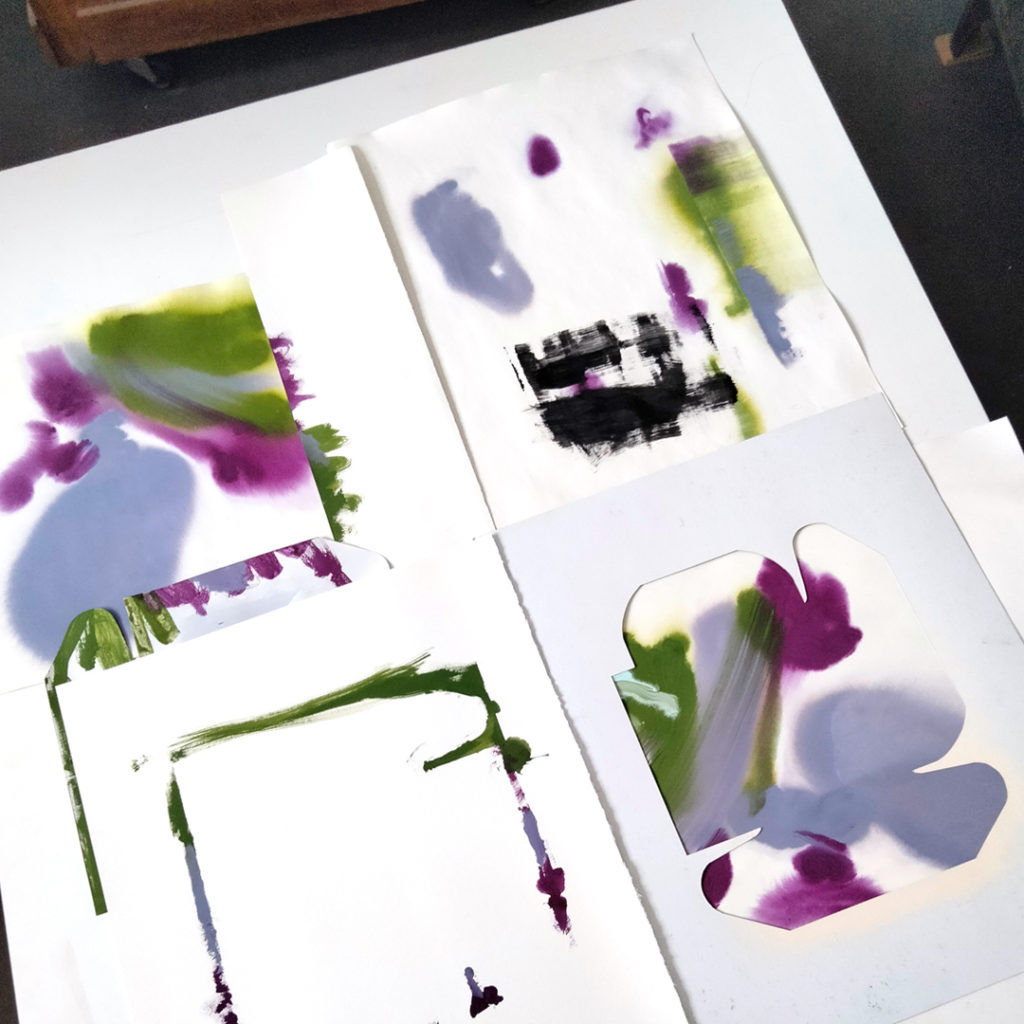
How would you define your style and artistic universe? What are your sources of inspiration?
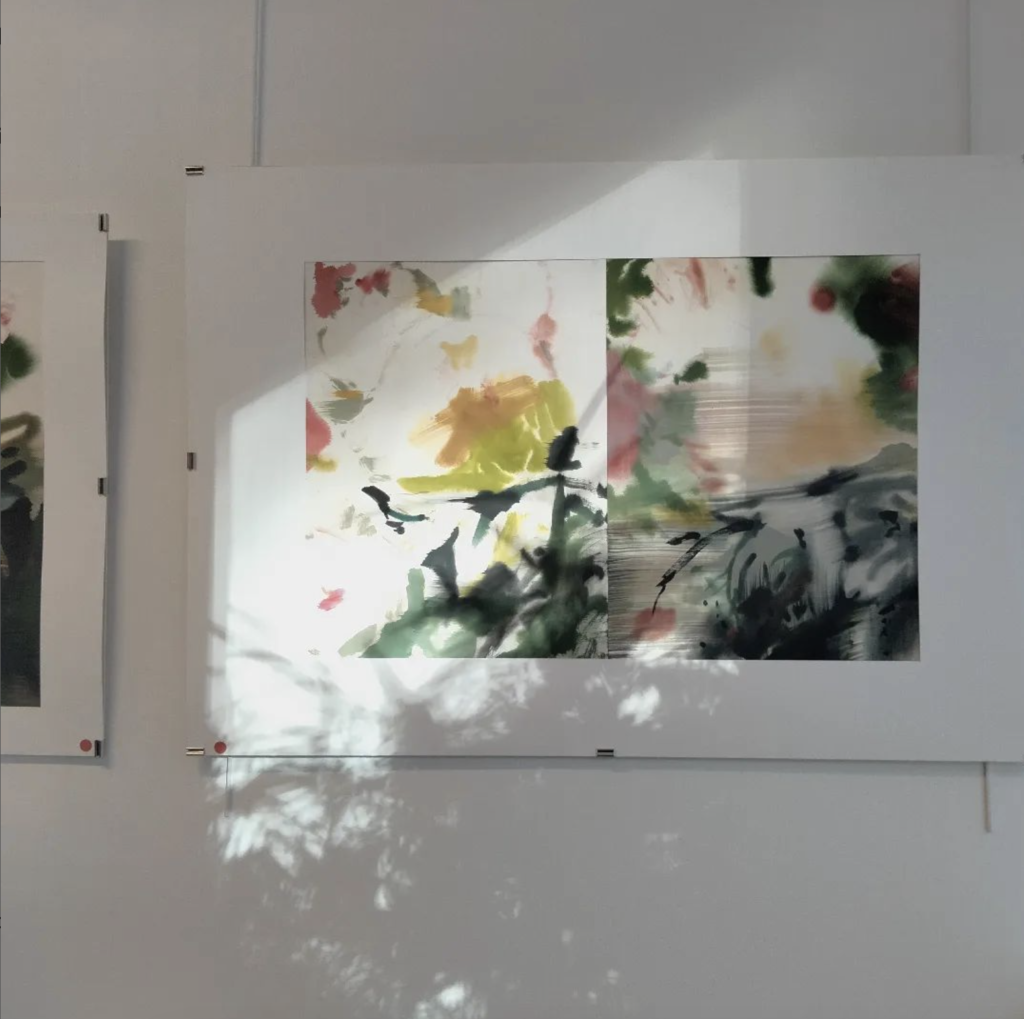
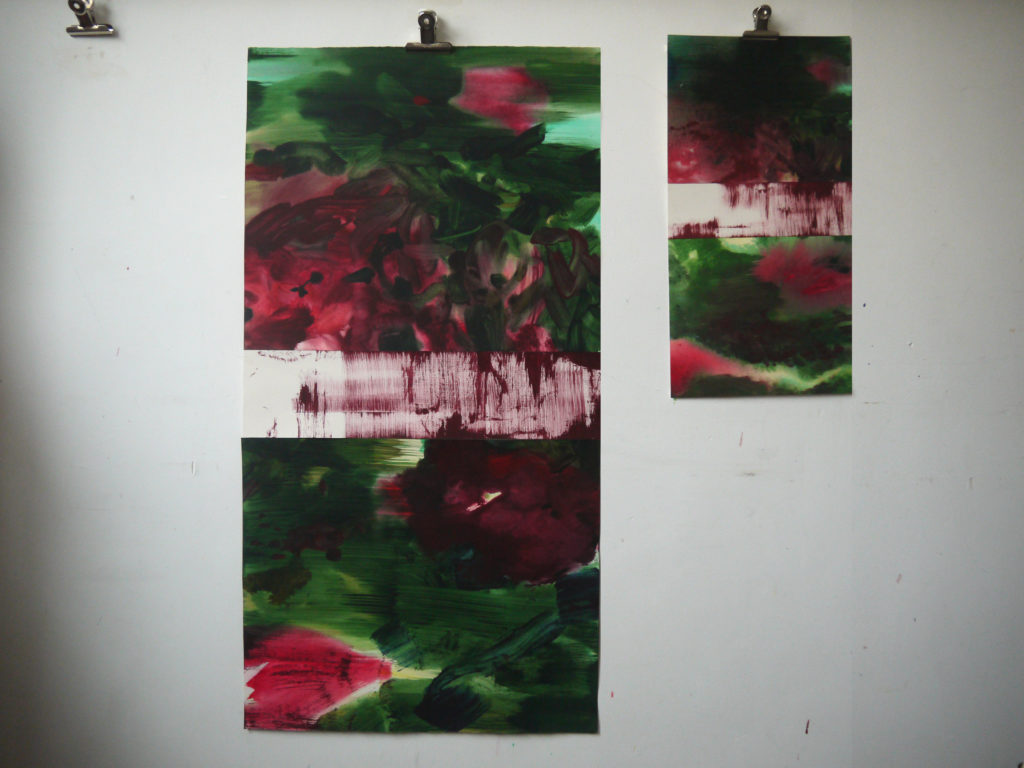
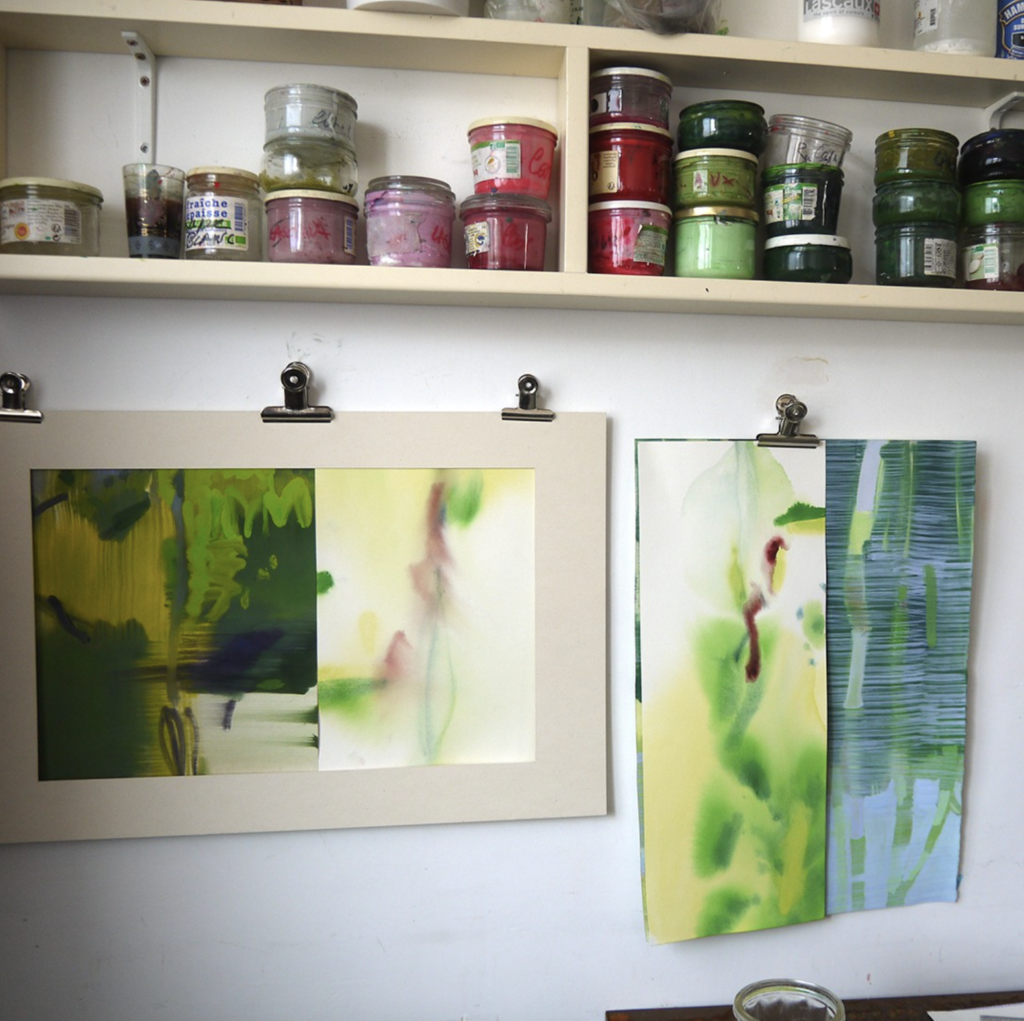
My technique is swift and gestural. Execution takes place on a flat surface, in thin layers, with little overlapping, it unfolds in immediacy and spontaneity. Poised between control and freedom, the result is something akin to an imprint, the trace of a flow, of an energy.
My work consists, in most cases, of the assembling of several painted elements, brought together according to the resonance that develops between them. This assembling follows an orthogonal rhythm that echoes the vertical and horizontal boundaries of the conventional canvas.
The movements of the painted surface stand in contrast to the rigour and tangibility of the vertical and horizontal markers of the assembly. At times, the form of the work even extends beyond the rectangle of the conventional canvas.
My work, originally rooted in figuration, has evolved towards abstraction. Abstraction or figuration is not, in any case, the real question. Rather, it is the question of what remains of what flees, of the trace of movements set against the porous markers formed by edges and boundaries.
Nicolas de Staël said, “Non-figurative tendencies do not exist,” and “The painter will always need to have before his eyes, near or far, the ever-shifting source of inspiration that is the sensory world.” The sensory world, translated into the materiality of paint.
What would you say to an artist just starting out today?
To learn to identify what is truly one’s own in one’s work. To trust the sense of strangeness that may emerge, and to work at recognising the quality within it.
Discover her artworrks here.